Important Directories to Know for Kubernetes CKA Exam

While I’m not an advanced Linux user, I’m comfortable navigating a Linux filesystem. But the lack of a GUI always gave me a bit of anxiety when trying to find where a binary or config file lives. To amplify that frustration, while preparing for the CKA 1.19 exam, I realized that Kubernetes doesn’t store things in one directory so to help myself visualize and remember the directories better, I made the below graphic that illustrates the directories that are necessary for troubleshooting a Kubernetes cluster. In this post, we’ll explore how Kubernetes uses each directory and it’s importance for the CKA.

Continue reading

Planning the Hardware Requirements for the VMware Cloud Foundation Management Domain, Part 2: Cloud Operations and Automation

In Part 1, we built the hardware build of materials and determined the utilization of a basic VMware Cloud Foundation (VCF) management domain deployment. But we need to put the “cloud” in by adding automation and self-service capabilities provided by vRealize Suite. To accomplish that, we can use SDDC Manager to deploy all the components of the vRealize Suite: Operations, Automation, and Log Insight into the SDDC. In this post, we’ll explore the compute and storage requirements for these components like we did in the previous post. This is going to explore the components required for a single region SDDC. There are a few more steps and components needed for setting up Cross-Region support.

Read more

Planning the Hardware Requirements for the VMware Cloud Foundation Management Domain

When talking with customers about deploying a standard VMware Cloud Foundation (VCF) architecture, the topic of the hardware requirements and details for the management domain are usually glossed over. There’s a basic understanding that it will consist of 4 hosts with sufficient resources to run the SDDC components for the workload domains that it manages. When it comes time for purchasing though, what is the actual hardware that will run the management domain and does VMware have recommended specs for hardware for the management domain?

Continue reading

Backup and Restore etcd in Kubernetes Cluster for CKA v1.19

The final module of the Cluster Architecture, Installation, and Configuration is Implement etcd backup and restore. Let’s quickly perform the actions we need to complete this step for the exam.

Perform a Backup of etcd

While it’s still early and details of the CKA v1.19 environment aren’t known yet, I’m anticipating a small change to how etcd backup and restore is performed. If you’ve been preparing for the CKA before the September 2020 change to Kubernetes v1.19, you may know be familiar with the environment variable export ETCDCTL_API=3 to ensure you’re using version 3 of etcd’s API, which has the backup and restore capability. However, Kubernetes v1.19 ships with etcd 3.4.9 and in etcd 3.4.x, the default API version is 3 so this process is no longer necessary! If etcdctl version returns a version lower than 3.4.x, you will still need to set the API version to 3 for performing backup and restore operations.

Continue reading

How to Integrate Amazon Smart Plug with Home Assistant

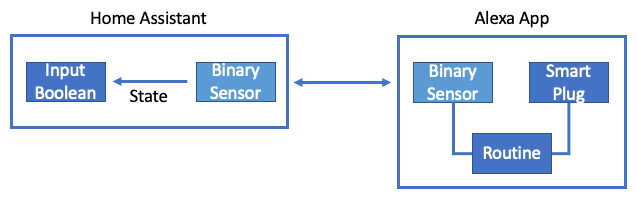
Amazon Smart Plugs are an excellent addition to automate your home with Alexa. However, if you’re an advanced home automation user using a more robust solution like Home Assistant, you will find their limited usage to the Alexa app very frustrating!

I discovered a solution to get Amazon Smart Plugs accessible in Home Assistant using input booleans and template binary sensors. By pairing a binary sensor from Home Assistant with an Amazon Smart Plug inside of an Alexa Routine, we’re able to control the smart plug from Home Assistant!

Continue reading

How the CKA Exam is Changing in 2020 with Kubernetes v1.19

I’ve been slowly working towards CKA and there is a significant change to the curriculum with the recent announcement from the Cloud Native Computing Foundation (CNCF) that the Certified Kubernetes Administrator (CKA) exam curriculum will be updated in September 2020 to cover Kubernetes v1.19. The v1.19 curriculum is a huge change from the v1.18 curriculum I’ve been studying and I prepared this comparison to help with my studies and hope it provides some clarity to those in a similar situation as me.

Kubernetes v1.19 hasn’t been finalized yet but there will certainly be new features, added commands, and others deprecated as part of the update. But that’s not the only change —  the exam curriculum is also changing a lot!

Continue reading

Why 2020 is the Year of Kubernetes for Me

I must admit that I wasn’t on the Kubernetes bandwagon from beginning. However, I’ve seen it mature rapidly over the last 4 years with an expanding ecosystem and high rate of adoption that has given me confidence that there is a future with Kubernetes and now is the time to invest in learning it. Here are the 3 things I observed over the last 12-18 months to solidify that now is the time for me to focus on becoming a Kubernetes expert:

Cloud Native Landscape Explosion

The Cloud Native Computing Foundation (CNCF) began publishing the CNCF Cloud Native Landscape back in 2016 to illustrate the projects and enterprise software that are part of the cloud native ecosystem and community. The Cloud Native Landscape graphic originally contained three projects: Kubernetes, Prometheus, and Opentracing. Today, it includes over 48 (not including CNCF member/non-member products and projects)! Observing this type of growth signals heavy investment by organizations and individuals to improving core functionality of Kubernetes or filling gaps in the ecosystem.

CONTINUE READING

Valid VMware License Types in Cloud Foundation (VCF) API

When I first start working with an API, I aim for low-hanging fruit. REST APIs, by nature, should be very generic in how they’re interacted with; however, there’s usually small nuances to take into consideration. For example, I recently found out that the VMware Cloud on AWS API uses a csp-auth-token header for authentication and authorization.

While authorization and authentication to the VCF API was straightforward (SDDC Manager username and password), I struggled the first time with POSTing a new VMware license due the API requiring a specific format for productType.

Continue reading

Automating VMware Cloud Foundation with PowerVCF

In a recent post, I wrote about interacting with VCF using the API to add a new license key as a simple way to begin familiarizing myself with the API. As a huge proponent of PowerShell, I began looking for a module to talk to the API but came up empty handed. I began working on a module with vSphere admins in mind because I know the important role PowerShell plays in day-to-day operations. During a conversation with Jase McCarty, he told me about the PowerVCF project which does exactly that! The module was initially developed and is maintained by Brian O’Connell and has 50 cmdlets which covers ~70% of the API calls in VCF 3.9.0:

Continue reading